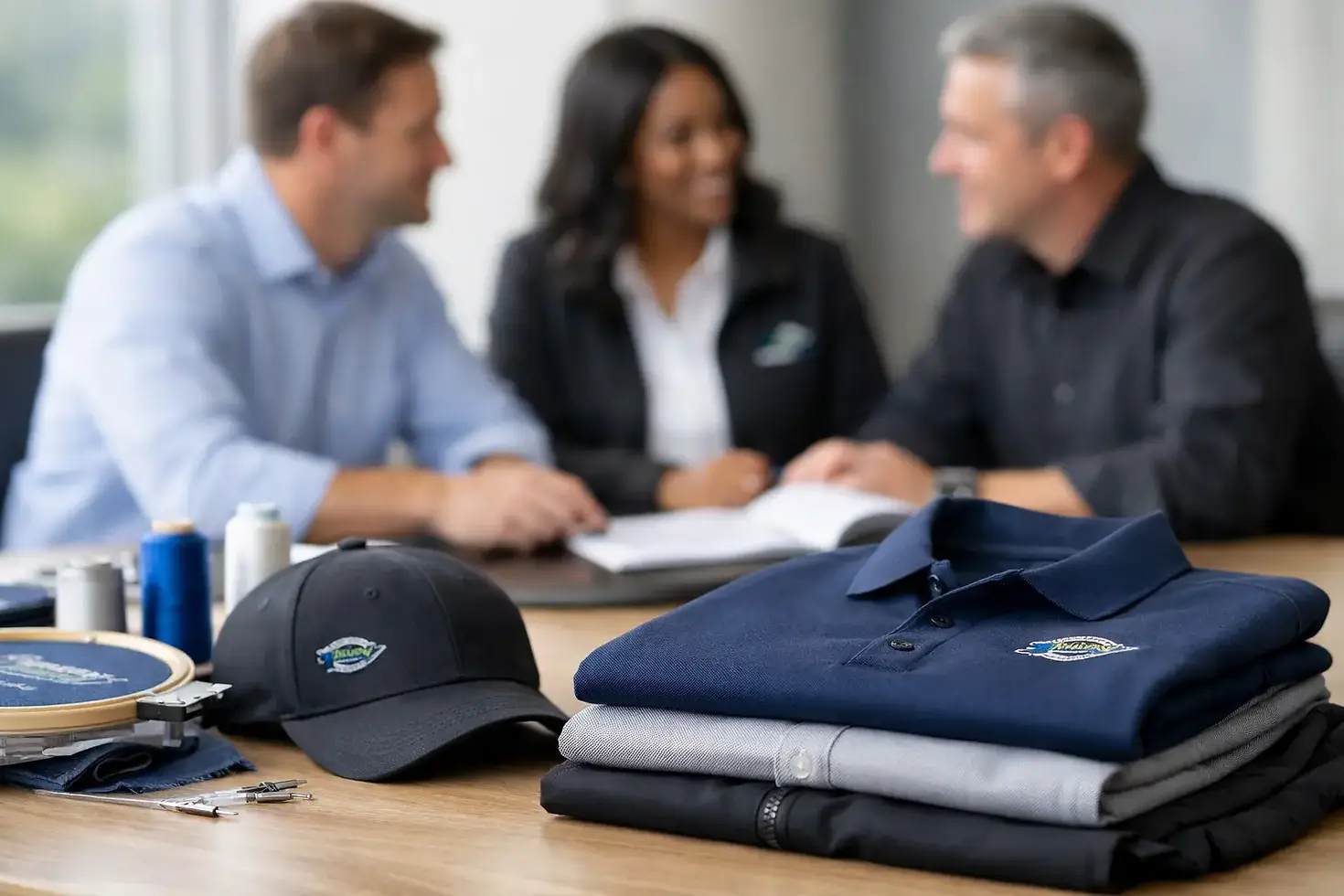
Embroidered Business Apparel Guide for Teams
- averyjanedesigns

- 3 days ago
- 6 min read
A mismatched stack of company shirts can make even a good business look unprepared. One employee has a faded tee, another has a stiff polo that never fits right, and someone else is wearing a jacket with a logo so large it takes over the whole front. That is exactly why an embroidered business apparel guide matters. When your team wears apparel that looks consistent, feels comfortable, and fits the job, your brand comes across as steady, professional, and easy to trust.
For small businesses especially, branded apparel is not just about appearance. It helps customers recognize your team, gives employees something practical to wear, and turns everyday workwear into marketing you can actually use. The trick is choosing pieces that make sense for your business instead of ordering whatever looks good in a catalog.
What embroidered business apparel should do
Good business apparel has a job to do. It should represent your brand well, hold up to regular wear, and make people feel comfortable enough to put it on again tomorrow. That sounds simple, but a lot of embroidery orders go sideways when people focus only on the logo and not the garment.
A landscaping crew needs something different from a real estate office. A church volunteer team has different needs than a boutique staff. The right apparel depends on where it will be worn, how often it will be washed, and what kind of impression you want to make in person.
Embroidery works especially well for businesses because it looks finished and dependable. A stitched logo has texture, durability, and a more polished feel than many printed options. On polos, button-downs, jackets, hats, and pullovers, embroidery tends to read as established and professional without feeling overly formal.
Start with the job, not the logo
Before choosing colors, thread, or placement, think about how the apparel will actually be used. If your employees are outside, fabric performance matters. If they meet clients face to face, appearance may matter most. If your team works long shifts, comfort becomes a big part of whether the apparel gets worn consistently.
For office and service businesses, polos are often the safest starting point. They are neat, versatile, and easy to wear across different body types. For more customer-facing roles, quarter-zips and lightweight jackets add a more elevated look without making staff feel overdressed. For hands-on crews, moisture-wicking shirts, work shirts, and hats usually make more sense than anything too structured.
This is where many small businesses save money in the long run. Instead of ordering one style for every situation, they choose a few smart basics that fit real daily use. That could mean polos for the front desk, caps for field staff, and outerwear for cooler weather. A smaller, practical mix often performs better than a large order of items nobody really likes wearing.
Choosing the right garments for embroidery
Not every piece of clothing embroiders equally well. Thicker, more stable fabrics usually support stitching better than thin, stretchy materials. That does not mean soft apparel is off the table, but it does mean design size and placement need to be handled carefully.
Polos remain a favorite because they balance comfort and structure. They work well for service companies, restaurants, office teams, schools, and community groups. Button-down shirts can look sharp for sales teams, hospitality, and event staff, though they may feel too formal for some settings.
Fleece jackets, vests, and pullovers are strong choices when you want branding people will wear beyond one season. Hats are another reliable option, especially for businesses that want visibility without asking employees to wear branded tops every day. In some cases, hats even become the most-used item in the order.
An embroidered business apparel guide would not be complete without one simple truth - the best garment is the one your team will actually wear. A premium look means very little if the fit is awkward, the fabric is heavy, or the shirt wrinkles the second it comes out of the dryer.
Logo size and placement can make or break the look
Most businesses do best with a left-chest logo. It is classic, clean, and easy to read up close. For polos, button-downs, jackets, and pullovers, this placement gives the logo presence without taking over the garment.
Large logos have their place, but bigger is not always better. On everyday work apparel, an oversized design can feel more promotional than professional. If your goal is a polished brand image, restraint usually wins.
Back logos can be useful for teams that work at events, in the field, or in spaces where employees are often seen from behind. Sleeve embroidery can add a nice touch too, but it works best when the design is simple and the garment style supports it.
If your logo has very fine details, tiny text, or shading, it may need to be adjusted for embroidery. Stitched designs are built differently than printed graphics. A good embroidery partner can help simplify a logo where needed so it stays readable and clean on fabric.
Color choices that help your brand, not fight it
Brand colors matter, but fabric color matters just as much. A great logo can disappear on the wrong shirt or hat. Contrast is what makes embroidery stand out.
Dark thread on a dark garment usually gets lost unless there is enough separation. Light garments tend to give more flexibility, but they may show wear faster depending on the work environment. Black, navy, gray, and white remain popular because they are versatile and easy to pair with many logos, though they each come with trade-offs.
Black looks sharp and hides stains well, but lint can show. White feels fresh and crisp, but it is harder to maintain in active settings. Gray is forgiving and modern. Navy often feels professional without being as harsh as black.
For many small businesses, it makes sense to choose one or two core garment colors and stay consistent. That creates a cleaner brand presentation and makes future reorders much easier.
How many pieces should you order?
This is where small businesses often feel stuck, especially if they do not want to commit to large quantities. The good news is that not every business needs a huge first order.
If you are trying embroidered apparel for the first time, start with what you know you will use. That may be a few polos for staff, a couple of hats, and one outerwear option for managers or team leads. A smaller order lets you test fit, fabric, and logo appearance before expanding.
This approach is especially helpful for growing teams, seasonal staff, and newer businesses still refining their brand image. No-minimum embroidery service is a real advantage here because it gives you room to order what fits your actual needs instead of forcing a bigger purchase just to meet a shop requirement.
Why communication matters as much as the stitching
A lot of embroidery stress comes from simple uncertainty. People are not always sure which file to send, what size the logo should be, or whether their item is even a good fit for embroidery. That is normal, especially for first-time buyers.
What helps most is working with someone who will answer questions plainly and guide the order instead of making the process feel complicated. Good service matters because custom work is personal. Even business apparel has a personal side to it when your company name, team identity, and hard-earned reputation are part of the order.
That is one reason many customers prefer a shop that offers real conversation, flexibility, and practical advice. At AJD Custom Embroidery, that personal approach is part of the work. When you are trying to outfit a small team, launch a brand, or simply make your business look more put together, having someone walk through the details can save time and prevent expensive mistakes.
A smart embroidered business apparel guide keeps things simple
You do not need a massive uniform program to make a strong impression. You need apparel that fits your team, suits the work, and carries your logo in a way that looks clean and consistent. Sometimes that means polos and hats. Sometimes it means quarter-zips for client meetings or jackets for outdoor crews. It depends on your business, your budget, and how your people actually work.
The best place to start is with everyday reality. Choose garments your team will reach for, keep the branding clean, and build from there. When business apparel feels useful instead of forced, people wear it with confidence, and customers notice.


Comments